
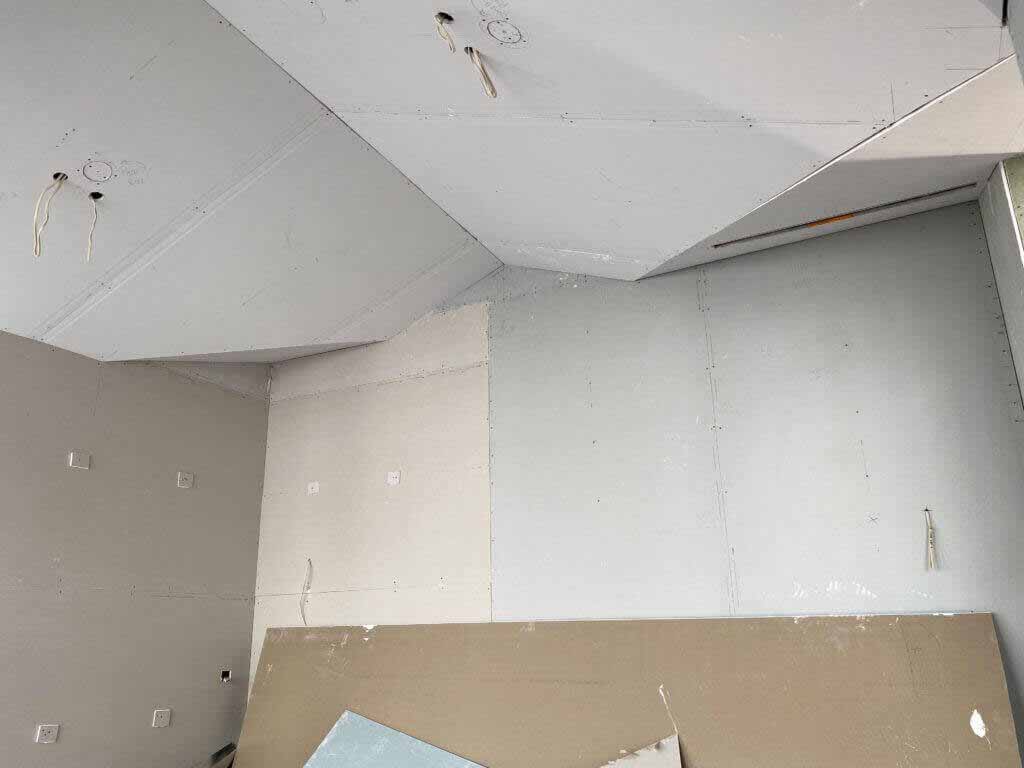
A good paint finish starts long before the first coat goes on. If the GIB® stopping underneath is uneven, poorly sanded or rushed, paint will expose it. If the painter arrives before the stopping is genuinely ready, the same thing happens. That handover between stopping and painting is one of the most important stages in an interior project.
We see a clear difference when both stages are planned together. The stopper knows what finish the painter needs, the painter knows exactly what has been done underneath, and any imperfections can be dealt with before they become visible across a freshly painted wall.
For Auckland homeowners renovating, building or repairing interiors, having one team manage the stopping and painting can remove a surprising amount of risk.
The Paint Finish Is Only as Good as the Surface Underneath
Paint does not hide a poor plasterboard finish. In many cases, it makes problems easier to see.
Ridges along joints, sanding marks, pinholes, raised tape edges and poorly feathered compound can all become obvious once the wall is sealed and painted. Strong natural light can make these defects stand out even further.
That is why GIB® fixing Auckland and stopping is approached with the final painted surface in mind. We are not preparing a wall simply to complete the stopping stage. We are preparing it for the finish that comes next.
If the intended paint colour, sheen or lighting conditions are known early, we can plan the surface preparation accordingly.
The Stopper to Painter Handover Is Where Problems Often Begin
When two separate contractors are involved, there is usually a handover point. One trade considers its work finished, then another arrives and assesses the wall from a completely different perspective.
That is where disagreements can happen.
The painter may find:
- joints that still need refinement
- sanding marks that will show through paint
- pinholes or scratches
- damaged corners
- compound that has not completely dried
- differences in texture across stopped and unstopped areas
The question then becomes who comes back to fix it, when they are available, and whether that changes the painting schedule.
When our stopping and house painting teams work on the same project, that conversation happens internally. If a surface needs another pass, we can deal with it before the decorating process moves too far ahead.
Sealer Can Reveal What Bare GIB Hides
A stopped wall can look excellent while it is still bare. Once the first sealer coat goes on, small differences in texture and surface quality often become easier to see.
This is an important inspection point.
Instead of treating sealer as the beginning of painting and simply continuing with topcoats, we use it as another opportunity to check the finish. If something needs attention, it is far better to correct it at this stage than after the room has received its final colour.
Our plastering work also gives us the ability to address broader surface issues where a standard local repair is not enough.
The goal is simple: by the time the final coats go on, the surface underneath should already be doing its job.
One Team Can Plan Around the Paint Finish From the Start
Not every painted wall has the same requirements.
A light, low sheen finish in a softly lit bedroom can behave very differently from a dark feature wall beside a large window. Gloss and semi-gloss finishes also tend to reveal surface irregularities much more clearly.
If the stopper does not know what the painter is planning, the required finish can be misunderstood.
When we manage both stages, we can consider:
Colour
Darker colours can make changes in surface texture easier to notice, particularly where light runs across the wall.
Sheen
Higher sheen finishes reflect more light and can expose jointing and sanding defects.
Lighting
Windows close to walls, skylights and directional lighting can create critical light that highlights even small irregularities.
Room use
A busy hallway, living room or commercial area may require a different approach from a spare bedroom.
This joined-up planning helps us match the preparation to the result the client is expecting.
Scheduling Becomes Much Simpler
Stopping has drying stages. Sanding creates dust. Sealing and painting then need their own preparation and drying time.
If separate companies are being coordinated, one delay can push the next trade out by several days. That is particularly frustrating on renovations where flooring, cabinetry or other finishing work is waiting.
We can sequence the job around the actual condition of the walls rather than an arbitrary handover date.
Our existing guide on why interior finishing trades need to work together in Auckland renovations looks at this issue across a whole renovation. The same principle is especially important between GIB stopping and painting because the two stages directly affect each other.
Accountability Is Clearer When Something Needs Attention
One of the least enjoyable parts of any renovation is hearing one contractor blame another.
The painter says the stopping was uneven. The stopper says the painter did not prepare correctly. Meanwhile, the homeowner is left trying to decide who is responsible.
We prefer a much simpler arrangement. If we are responsible for the stopped surface and the painted finish, we are responsible for making the two work together.
That gives us control over preparation, inspection and quality from the plasterboard stage through to the final paint.
Our painting work also carries a 10-year written guarantee, while our GIB fixing and stopping workmanship is backed by a two-year guarantee.
Better Preparation Usually Means a Better Final Result
The real benefit of using one finishing team is not convenience alone. It is continuity.
The people preparing the wall understand what the final finish needs to look like. The painting team knows how the wall was stopped and what preparation has already been completed. Issues are dealt with while they are still straightforward to fix.
For clients, that means fewer handovers, less chasing between contractors and a clearer path from bare plasterboard to finished room.
Talk to Us Before Your Next Interior Project
If your project involves both GIB stopping and painting, it makes sense to plan those stages together from the beginning.
Our team can handle the plasterboard preparation, stopping, sanding and painting as one coordinated job, with the finish in mind from day one. Get in touch with us to discuss your Auckland renovation, new build or interior repair and we can work through the right scope before the job starts.