
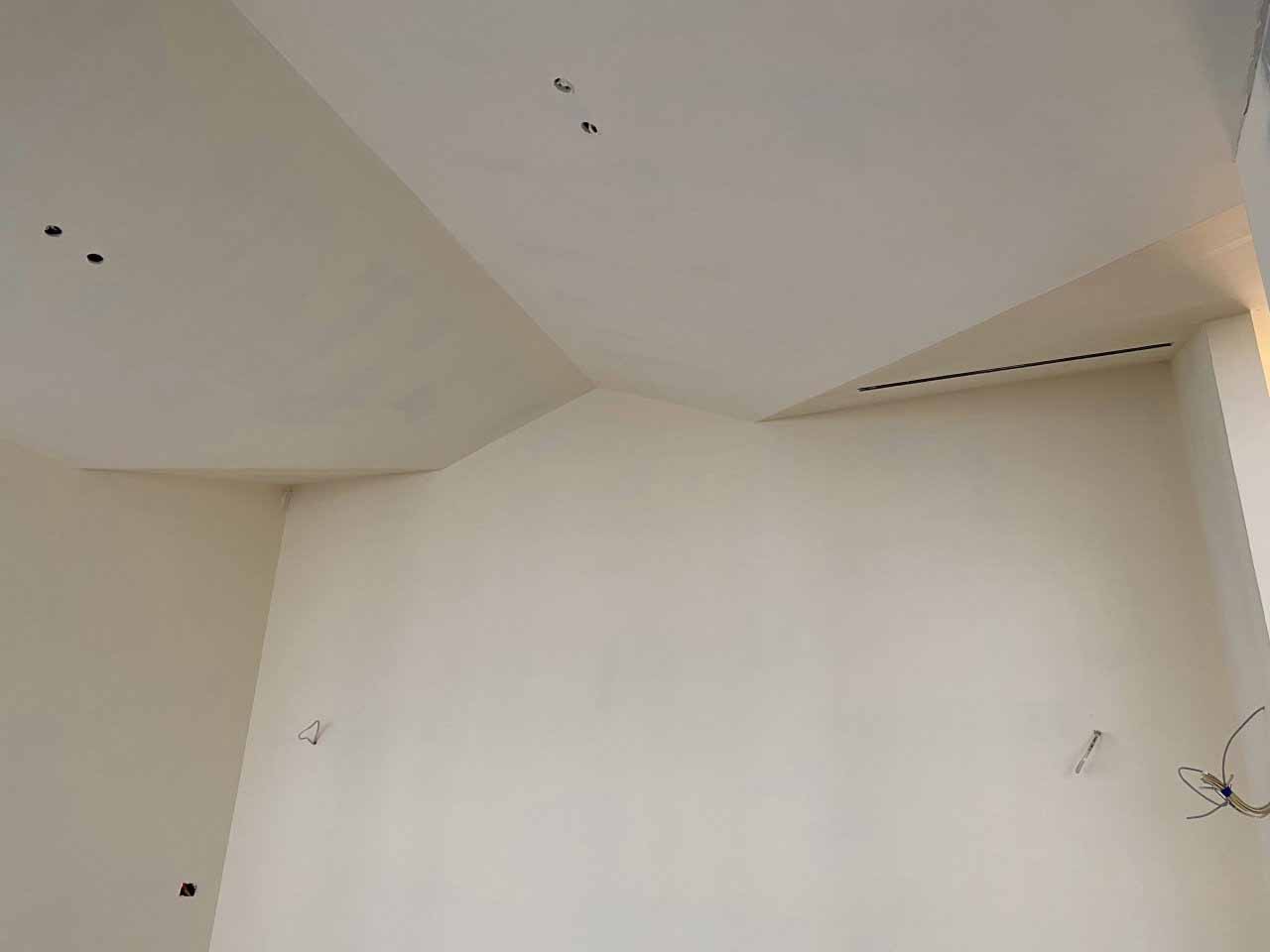
Freshly stopped GIB® can look ready for colour once it has been sanded clean, but applying topcoat directly over it is one of the easiest ways to compromise the final finish.
New plasterboard contains two very different surfaces. There is the paper face of the board and there is the jointing compound used across joints, corners and fastener heads. Those surfaces absorb paint differently. A proper wallboard sealer helps bring them closer together before the decorative coats are applied.
We are often asked which primer or sealer is best for new GIB® in New Zealand. There is no single product that is right for every room. The correct option depends on the level of finish, the final paint system and whether the plasterboard is in a dry or wet area.
Why New GIB® Needs Sealing Before Painting
The main job of a wallboard sealer is to control porosity.
If paint is applied directly over bare plasterboard and stopping compound, the stopped sections can absorb and reflect the coating differently from the surrounding paper. Once dry, you may see the joints as dull or shiny patches even though the paint colour appears consistent.
This is commonly known as flashing.
A proper sealer also creates a consistent base for the following coats and supports adhesion. Poor preparation, remaining sanding dust or stopping compound that has not dried fully can further weaken adhesion and contribute to peeling or other paint failures.
That is why our house painting Auckland process begins with the substrate rather than the colour.
Sealer, Primer and Undercoat Are Not Always the Same Thing
The terminology can become confusing because some products perform several functions.
A primer is generally used to create adhesion to a substrate. A sealer reduces unwanted absorption or seals the surface. An undercoat creates a suitable base for the topcoat. Some modern products combine all three roles.
For new paper-faced GIB®, we want a product specifically recommended for plasterboard and stopping compounds rather than treating any leftover primer as interchangeable.
Resene Options for New GIB®
Resene has different systems depending on the plasterboard finish and room conditions.
Resene Broadwall Waterborne Wallboard Sealer
For new paper-faced plasterboard finished to Level 4 in a normal dry interior, Resene Broadwall Waterborne Wallboard Sealer is a straightforward choice.
It is designed for plasterboard and air-drying stopping compounds and helps minimise the differences in porosity and texture between the two surfaces. Resene recommends sanding the plasterboard smooth first, sealing it, then lightly sanding the sealer to remove nibs before topcoating.
If our GIB® fixing Auckland and stopping work has created a good Level 4 surface, this is the type of sealer system commonly used before low-sheen interior paint.
Resene Broadwall Surface Prep & Seal
Where the specification is Level 5, or the room has critical lighting, dark colours or a more reflective paint finish, Resene Broadwall Surface Prep & Seal is designed to go further.
It is a high-build coating that helps equalise surface porosity while smoothing minor textural differences. Resene specifically recommends it for Level 5 plasterboard preparation and areas affected by critical light or strong colours.
This is a useful example of why the paint system needs to be discussed before our plastering Auckland work is finished. A demanding final colour may need a different preparation system from an ordinary bedroom wall.
What About Resene Products in Bathrooms and Laundries?
Wet areas need separate consideration.
For new paper-faced plasterboard in bathrooms, laundries and other wet areas, Resene recommends systems such as Resene Sureseal or Resene Waterborne Smooth Surface Sealer rather than treating standard Broadwall Wallboard Sealer as the default.
The topcoat also needs to suit the room.
If moisture control forms part of a larger renovation, we can coordinate the painting work with our waterproofing Auckland service so the substrate and final coating are treated as part of the same system.
Why Skipping Sealer Causes Flashing
Imagine painting across two surfaces that absorb moisture at different rates.
The plasterboard paper accepts the paint one way while the jointing compound accepts it another. Even after two topcoats, the difference can remain visible as bands or patches across the wall.
Sealing helps equalise that absorption before colour goes on.
This becomes especially important where:
- daylight runs across the wall
- dark colours are being used
- semi-gloss or gloss paint is specified
- broad areas of stopping are present
- the wall has received extensive repairs
Skipping sealer may save one stage on the day, but it can leave a finish that requires substantially more work to correct later.
Sealer Cannot Fix Poor Stopping
It is equally important to understand what sealer cannot do.
Ordinary wallboard sealer does not hide ridges, deep sanding marks or badly feathered joints. Those are surface preparation issues and need to be fixed first.
Before sealing, the stopping should be completely dry, smooth and free from loose sanding dust. If it is not ready, putting paint over it simply locks the problem into the coating system.
Our guide to what to expect during an Auckland interior renovation, from GIB® fixing to final paint explains why each finishing stage needs to be completed properly before the next begins.
Which Sealer Should You Use on Your New GIB®?
For a typical dry interior with a good Level 4 finish, a dedicated wallboard sealer such as Resene Broadwall Waterborne Wallboard Sealer or an appropriate combined system such as Dulux 1Step Prep can provide a suitable base.
For Level 5, critical light, strong colours or demanding finishes, the preparation system may need to step up accordingly.
Wet areas need their own coating specification.
The most important thing is matching the sealer to the substrate, room and final paint finish rather than choosing a product simply because it says “primer” on the tin.
If you are having new GIB® installed, stopped and painted, talk to our team about the full system from the start. We can prepare the walls properly, select an appropriate sealer and carry the work through to the final coats so the finished surface looks consistent rather than revealing every joint once the light hits it.

