
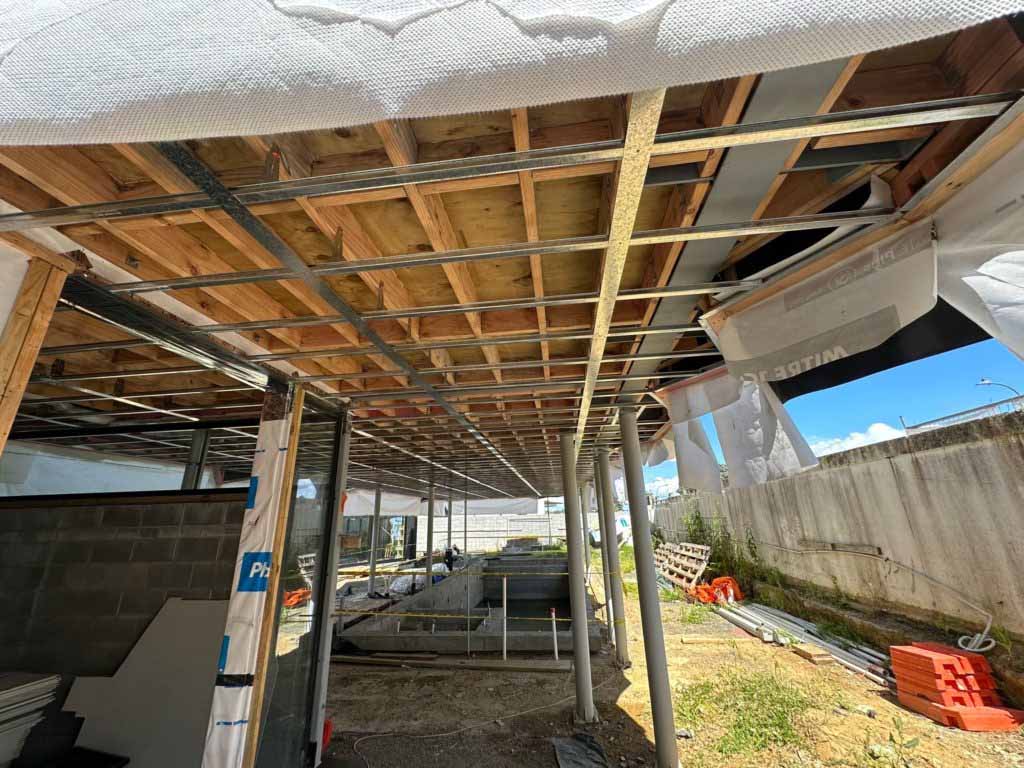
When I visit clients across Auckland, one of the most common questions I hear is, “Why should I invest in a Rondo ceiling system?” To many homeowners, the term sounds like a technical detail that belongs in a builder’s manual rather than a renovation plan. In reality, Rondo ceiling systems are a smart investment that underpin the entire interior finish. At Qualified Stopping we use them frequently because they support everything from plasterboard fixing to painting. This article explains what Rondo systems are, why they matter and when you should consider them in your renovation.
What is a Rondo ceiling?
Rondo ceilings are engineered metal ceiling grids designed to create perfectly level, structurally sound surfaces ready for plasterboard. Instead of relying on timber or improvised framing, a Rondo system uses lightweight, galvanised steel channels and suspension components. These are purpose-designed to hold plasterboard in place, provide a consistent gap for services and ensure that finished ceilings remain flat over time. Rondo is popular with architects and builders because it allows for straight lines, curves and specialty design features that are difficult to achieve with conventional framing.
The Benefits of Rondo ceilings in Modern Homes
In a modern renovation, Homeowners expect clean lines, consistent finishes and rooms that feel spacious. Rondo ceilings contribute to these outcomes in several ways:
- Perfect alignment: The steel grid makes it easy to achieve a level ceiling even when the existing structure is uneven. This means your plasterboard and finishing layers will sit flat without bulges or sags.
- Structural support: Rondo systems are engineered to hold plasterboard and insulation securely. They reduce the risk of movement and cracking, which is particularly important in Auckland’s varied climate.
- Design flexibility: Because the grid can be curved and suspended at different heights, it suits feature ceilings, bulkheads and recessed lighting. A Rondo system can even be used to hide ducting and wiring without compromising access.
- Long-term durability: Galvanised steel resists moisture and pests better than timber. In bathrooms, kitchens and laundries this helps to prevent the warping that leads to cracked ceilings.
When you combine these benefits with professional plasterboard fixing, stopping and plastering, the final effect is smooth and seamless. It is a hidden detail that makes visible finishes look exceptional.
When is a Rondo Ceiling System the Right Choice?
Not every room needs a Rondo ceiling. For simple renovations where existing ceilings are level and in good condition, traditional plasterboard may be enough. There are several situations where a Rondo system is worth considering:
- New builds or major renovations: If walls are being moved or the ceiling height is changing, a steel grid provides the flexibility to create the right levels and support.
- Uneven or sloping ceilings: Villas and bungalows often have uneven ceilings due to settling or original construction. A suspended grid allows us to correct these issues without major structural work.
- Rooms with lots of services: Kitchens, bathrooms and media rooms may need ventilation ducting, audio cabling or extra insulation. A Rondo system creates a cavity without compromising the finished ceiling.
- High-end finishes: If you’re planning recessed lighting, negative detailing or architectural curves, a metal grid is the easiest way to achieve these features.
During a consultation, I often explain that investing in quality framing is like investing in good foundations for a house. It supports everything that comes later, from plasterboard fixing to plastering, and ultimately creates a better result.
Why Professional Installation Matters
Like any structural component, Rondo ceilings work best when installed correctly. The grid must be spaced, levelled and fixed according to manufacturer guidelines. Incorrect installation can lead to sagging, noisy movement or failure under load. Our team has the specialist tools and training to install these systems accurately. We also coordinate Rondo installation with GIB® fixing and stopping so that plasterboard joints align with the grid and fixing patterns.
Professional installation also means compliance with building codes. In some cases, consent is required for suspended ceilings, particularly in commercial spaces. We handle these details and ensure that the system meets fire and acoustic requirements. By doing the job properly once, you avoid costly rectification later.
How Rondo Supports the rest of your Renovation
A ceiling frame might seem separate from services like waterproofing or tiling, yet everything is connected. Poor framing can cause movement in walls and ceilings, which leads to cracks in plaster, tiled grout lines that misalign, and paint finishes that reveal imperfections. A Rondo system provides a stable base so that our plasterboard fixing and stopping can achieve a smooth surface. Once the plastering is done, painters enjoy even substrates that produce crisp lines and uniform colour. If you are also updating floors or installing tiles, the level ceiling helps to create a cohesive look throughout the room.
Our approach at Qualified Stopping
As the owner of Qualified Stopping I am proud of our holistic approach. We do not just fix plasterboard; we provide a suite of services designed to work together. When a job involves a Rondo ceiling we manage the entire process, from the initial design to the final coat of paint. We liaise with builders and electricians, order the right materials and ensure each stage happens in the correct sequence. Clients appreciate that they only need to deal with one team for their GIB® fixing, stopping, plastering, and painting, rather than trying to coordinate multiple contractors.
In addition, we stand behind our work. Because we understand how important the substructure is, we do not cut corners. We use genuine Rondo components and follow manufacturer specifications. We also maintain clear communication, explaining why certain decisions are made and how they will benefit the finished result.
Connecting the dots
For readers who want to understand how a ceiling system fits within the bigger picture, I recommend reading our article on why interior finishing trades need to work together in Auckland renovations. It explains the importance of sequencing and collaboration across trades.
Ready to upgrade your ceilings?
Rondo ceiling systems may not be the most glamorous part of a renovation, but they make a tangible difference to the look and longevity of your home. By investing in a properly designed and installed system, you create a level, stable canvas for all the finishing touches that follow. If you are considering a ceiling upgrade as part of your renovation, I would be happy to chat through your options. Contact the Qualified Stopping team today to discuss your project and discover how our expertise in Rondo ceiling solutions, plasterboard fixing and finishing can bring your vision to life.